Best Lower Back Exercises to Relieve Pain & Build Strength
Lower back pain affects millions of people across the UK, often creeping in after long hours at a desk, poor lifting technique, or simply years of neglecting core strength. If you’ve been searching for the best lower back exercises, you’re likely hoping to move without wincing, sleep without discomfort, or finally bend down to tie your shoes pain-free. This article walks through scientifically grounded, physiotherapist-endorsed exercises that target the muscles supporting your spine, including your erector spinae, glutes, and deep core stabilisers. You’ll learn not just which movements work, but why they work, how to perform them safely, and how to build a sustainable routine. Whether your pain stems from sitting too much or an old injury, the right exercise plan can transform your mobility and quality of life within weeks.
Understanding Why Lower Back Pain Happens
Lower back pain rarely appears out of nowhere. It typically develops gradually from weak core muscles, tight hip flexors, poor posture, or repetitive strain from daily habits like sitting hunched over a laptop. When your deep stabilising muscles—particularly the transverse abdominis and multifidus—fail to support your spine properly, surrounding muscles compensate, leading to tension, stiffness, and eventually pain. Understanding this mechanism is essential because it explains why simply stretching isn’t enough; you need targeted strengthening alongside flexibility work.
Sedentary lifestyles have made lower back issues increasingly common, even among younger adults in the UK. Hours spent sitting compress spinal discs and shorten hip flexor muscles, which pulls the pelvis out of alignment and places extra strain on the lumbar spine. Meanwhile, weak glutes—often called “gluteal amnesia” by physiotherapists—force the lower back to do work it wasn’t designed for. This combination of tightness and weakness creates a vicious cycle that worsens without intervention.
The good news is that this cycle can be reversed through consistent, targeted movement. Research consistently shows that active rehabilitation outperforms prolonged rest for most non-specific lower back pain cases. Movement increases blood flow, reduces inflammation, and rebuilds the muscular support system your spine relies on. This is precisely why exercise-based approaches, rather than passive treatments alone, form the foundation of effective long-term back pain management.
The Bird Dog: Building Core Stability Without Strain
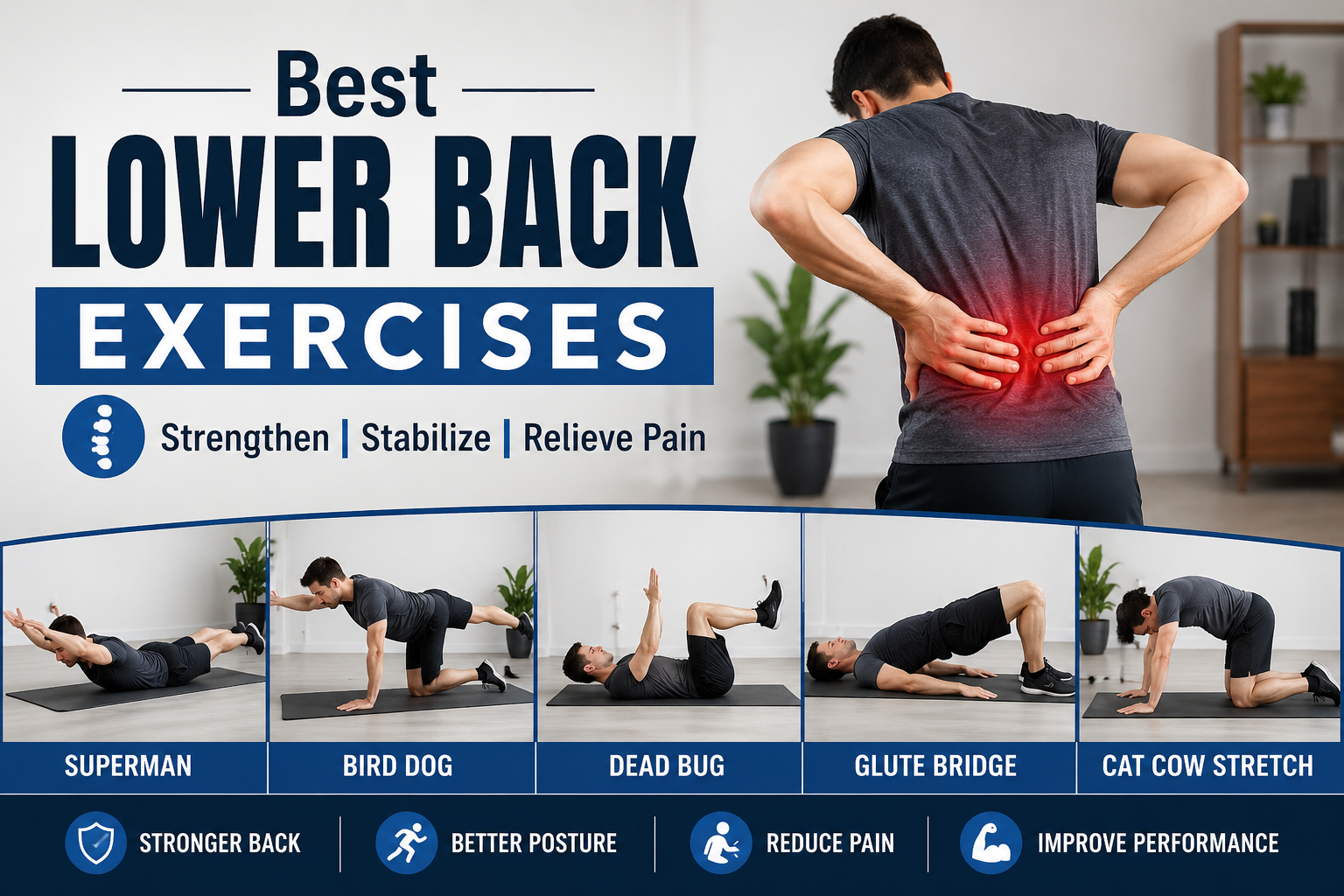
The bird dog exercise is widely regarded by physiotherapists as one of the best lower back exercises for building spinal stability without aggravating existing pain. Performed on hands and knees, you extend one arm forward while simultaneously extending the opposite leg backward, keeping your spine neutral throughout. This movement trains your core to resist rotation and maintain stability, which is exactly the function your deep back muscles need to relearn after periods of weakness or injury.
What makes the bird dog particularly valuable is its low-impact nature combined with high functional carryover. Unlike crunches or sit-ups, which can compress spinal discs, this exercise teaches your nervous system to coordinate opposite limb movements while keeping the lumbar spine stable. This pattern mimics everyday activities like walking and reaching, making it directly transferable to real-world movement. Beginners often struggle initially with balance, which is a sign that core stabilisation needs work.
To perform it correctly, focus on slow, controlled movements rather than speed. Hold each extended position for two to three seconds, ensuring your hips stay level and your back doesn’t sag or arch excessively. Three sets of eight to ten repetitions per side, performed several times weekly, can noticeably improve core endurance within a month. Many physiotherapy clinics across the UK include this exercise in early-stage rehabilitation programmes precisely because of its safety profile and effectiveness.
Glute Bridges: Strengthening the Posterior Chain
Glute bridges target one of the most underused muscle groups in people with lower back pain: the gluteus maximus. When your glutes are weak, your lower back and hamstrings overcompensate during everyday movements like standing up, climbing stairs, or bending forward. This compensation places excessive strain on the lumbar spine, making glute activation exercises essential rather than optional for anyone serious about resolving back pain long-term.
To perform a glute bridge, lie on your back with knees bent and feet flat on the floor, hip-width apart. Push through your heels to lift your hips toward the ceiling, squeezing your glutes firmly at the top while avoiding overextension through the lower back. The key technical cue here is initiating the movement from your glutes rather than your spine, which many beginners get wrong by arching excessively. Holding the top position for two seconds before lowering slowly maximises muscle engagement.
Progressions such as single-leg glute bridges or adding resistance bands above the knees increase difficulty once basic form becomes comfortable. Aiming for three sets of twelve to fifteen repetitions, two to three times weekly, builds meaningful strength over four to six weeks. This exercise pairs particularly well with the bird dog, as together they address both anterior core stability and posterior chain strength, two pillars of comprehensive lower back rehabilitation.
Cat-Cow Stretch: Restoring Spinal Mobility
While strengthening is crucial, mobility work remains equally important among the best lower back exercises, and the cat-cow stretch addresses this need directly. This gentle, flowing movement takes the spine through flexion and extension, helping to lubricate the facet joints and reduce stiffness that accumulates from prolonged sitting or inactivity. It’s particularly beneficial as a warm-up before strength training or as a standalone mobility session on rest days.
Starting on hands and knees, you alternate between arching your back upward (cat position) and dipping it downward while lifting your chest (cow position), synchronising the movement with your breath. Inhaling during the cow position and exhaling during the cat position creates a rhythmic flow that also engages the parasympathetic nervous system, which can help reduce muscle tension associated with stress-related back pain. This dual benefit—physical and nervous system regulation—makes cat-cow uniquely valuable.
Performing eight to twelve slow repetitions, ideally daily, helps maintain spinal segment mobility and prevents the stiffness that often precedes acute flare-ups. Unlike high-intensity exercises, this stretch carries minimal risk and can be done even during painful episodes, making it accessible to virtually everyone regardless of fitness level. Many people report immediate relief in tension after just one session, which reinforces consistent practice.
Dead Bug Exercise: Training Core Control Under Load
The dead bug exercise has gained recognition among physiotherapists and strength coaches as one of the most effective core stabilisation movements for protecting the lower back. Lying on your back with arms extended toward the ceiling and knees bent at ninety degrees, you slowly lower one arm and the opposite leg toward the floor while keeping your lower back pressed firmly against the ground. This anti-extension pattern directly counters the tendency of the lumbar spine to arch under load, a common contributor to pain.
What distinguishes the dead bug from traditional ab exercises is its emphasis on control rather than range of motion. Many beginners attempt to lower their limbs too far, causing the lower back to lift off the floor and lose the very stability the exercise is meant to build. Keeping movements small and controlled, while maintaining constant contact between your back and the floor, ensures the deep core muscles—rather than momentum—are doing the work.
Progressing gradually from bent-knee variations to straighter leg extensions as strength improves allows continuous challenge without compromising form. Three sets of eight repetitions per side, performed two to three times weekly, builds the kind of deep core endurance that protects against future injury. Combined with glute bridges and bird dogs, the dead bug completes a well-rounded routine addressing stability from multiple angles.
Building a Safe and Sustainable Routine
Knowing individual exercises is only part of the equation; combining them into a structured, sustainable routine is what produces lasting results. Most physiotherapists recommend starting with three sessions per week, allowing at least one rest day between sessions to permit muscle recovery and adaptation. Each session should ideally combine one mobility exercise like cat-cow with two or three strengthening movements such as bird dog, glute bridges, and dead bugs, ensuring balanced development across the entire core and posterior chain.
Progression matters just as much as consistency. As exercises become easier, gradually increasing repetitions, hold times, or introducing resistance bands prevents plateaus and continues challenging the muscles appropriately. However, progression should never come at the expense of form; performing fewer repetitions with correct technique delivers far greater benefit than rushing through sets with compensatory movement patterns that could reinforce existing dysfunction rather than correcting it.
It’s equally important to recognise when professional guidance is necessary. While these exercises are generally safe for most people with non-specific lower back pain, anyone experiencing numbness, tingling down the legs, or pain that worsens despite consistent exercise should consult a GP or chartered physiotherapist. Persistent or severe symptoms may indicate underlying issues requiring tailored assessment, and self-directed exercise should complement, not replace, appropriate medical evaluation when red flags are present.
Conclusion
Resolving lower back pain isn’t about finding one miracle exercise; it’s about combining mobility, stability, and strength work consistently over time. The bird dog and dead bug rebuild core control, glute bridges restore strength to an often-neglected muscle group, and cat-cow stretches maintain the spinal mobility that prevents stiffness from taking hold. Together, these exercises form a comprehensive, evidence-informed approach that addresses the root causes of back pain rather than merely masking symptoms temporarily. The best lower back exercises are the ones you’ll actually do consistently, performed with proper form and gradually increasing difficulty as your strength improves. Start slowly, listen to your body, and remember that progress with back pain is rarely linear. With patience and regular practice, most people find significant relief within a few weeks, gaining not just a pain-free back, but renewed confidence in everyday movement.