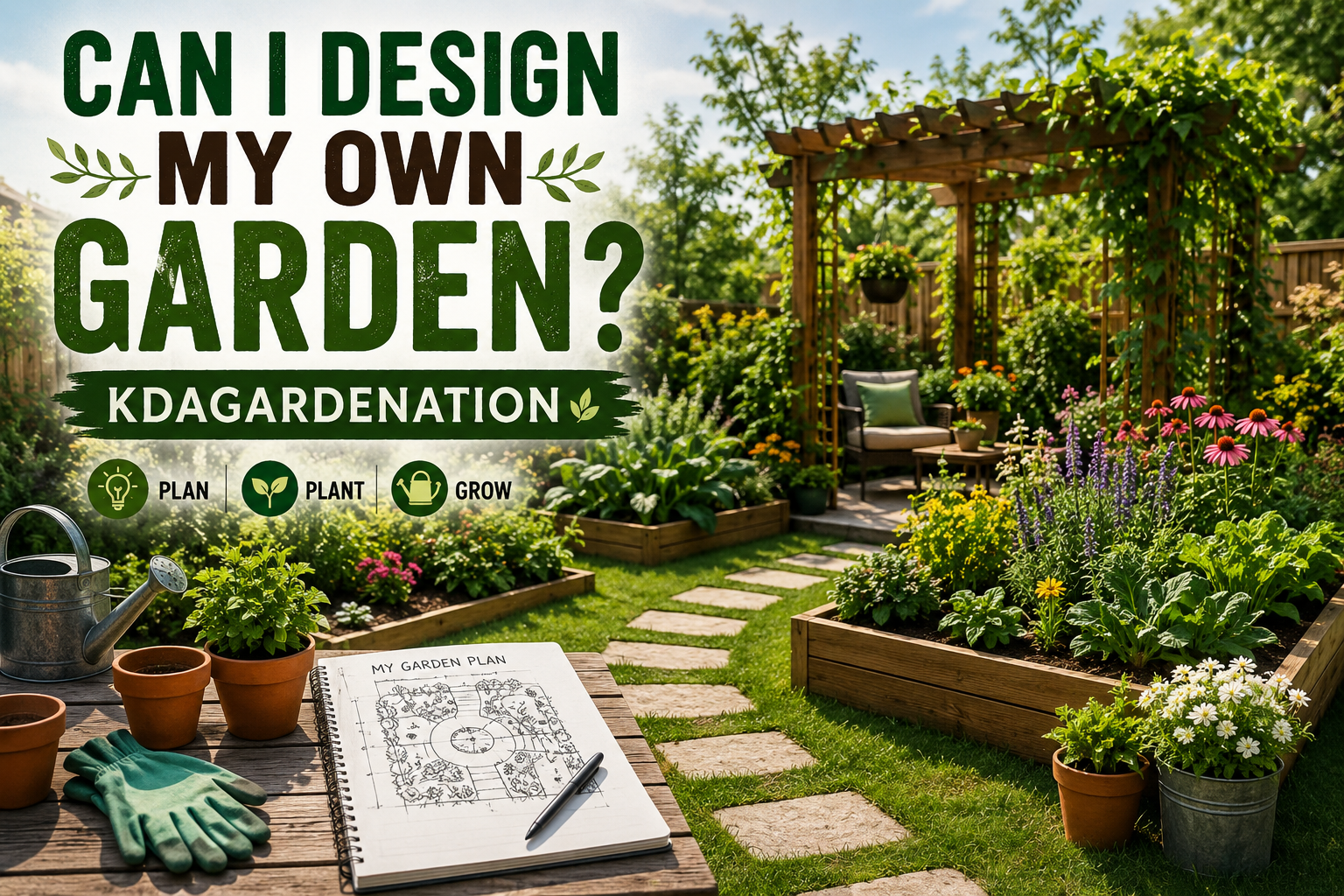
Can I Design My Own Garden? A Complete UK Homeowner’s Guide
Can I design my own garden without paying for a professional landscaper? It’s one of the most common questions UK homeowners ask when they look out at a blank patch of lawn and wonder where to begin. The good news is that with the right planning, a bit of patience, and some practical know-how, absolutely anyone can create a beautiful, functional outdoor space. This guide walks through everything you need to consider, from assessing your plot and setting a realistic budget to choosing plants that thrive in British weather. Whether you’re working with a tiny courtyard in Manchester or a sprawling garden in the Cotswolds, you’ll find clear, actionable advice here. By the end, you’ll feel confident enough to pick up a spade and start transforming your space yourself.
Understanding Your Garden Before You Begin
Before any digging or planting happens, it pays to genuinely understand the space you’re working with. Every successful DIY garden design starts with an honest assessment of soil type, drainage, sunlight patterns, and existing structures. Spend a few weeks simply observing your garden at different times of day, noting which areas receive full sun, partial shade, or remain damp after rainfall. This information becomes the foundation for every decision that follows, from plant selection to the placement of seating areas or a shed.
Soil testing is often overlooked by beginners, yet it’s one of the simplest ways to avoid costly mistakes. A basic pH testing kit, available from most garden centres, tells you whether your soil is acidic, neutral, or alkaline, which directly influences what will flourish. Clay-heavy soil, common across much of the UK, drains slowly and benefits from organic matter like compost to improve structure. Sandy soil, by contrast, drains quickly and often needs more frequent watering and nutrient replenishment. Knowing this before you buy plants saves both money and disappointment.
It’s also worth mapping your garden’s dimensions accurately, including boundaries, existing trees, and any underground utilities or drainage pipes. A simple sketch on graph paper, drawn to scale, gives you a working canvas to experiment with layout ideas before committing to anything physical. Many people find it helpful to photograph the garden from several angles and print these out, sketching directly over them to visualise changes. This preparation stage might feel slow, but it prevents the expensive trial-and-error that often accompanies rushed garden projects.
Setting a Realistic Budget and Timeline
One of the biggest advantages of designing your own garden is control over spending, but that only works if you plan your budget properly from the outset. Start by listing every element you want, from hard landscaping like patios and paths to soft landscaping such as borders, lawns, and planting schemes. Prioritise these into “must-haves” and “nice-to-haves,” because very few people can afford everything at once, and phasing the project across seasons or years is entirely normal in the UK, where many gardens evolve gradually.
Hard landscaping materials, including paving, decking, and fencing, typically consume the largest portion of any garden budget, so research prices at local builders’ merchants before finalising your plan. Buying plants as smaller specimens rather than mature ones is a well-known money-saving trick, since most will reach full size within two to three growing seasons anyway. Seasonal sales at garden centres, particularly during autumn, often offer significant discounts on shrubs, trees, and perennials nearing the end of their retail window. Setting aside a contingency fund of around ten to fifteen percent of your total budget also protects against unexpected costs like soil removal or drainage issues.
Timing matters just as much as money when designing your own garden. Spring and early autumn are generally the best periods for planting in the UK, as soil temperatures and rainfall levels support root establishment without the stress of summer heat. Hard landscaping work, such as laying patios or building raised beds, is best tackled in drier months to avoid working in mud. Realistically, most self-designed gardens take shape over twelve to eighteen months rather than a single weekend, and accepting this timeline reduces pressure and allows the space to develop organically.
Choosing a Garden Style That Suits Your Home
Selecting a coherent style is what separates a garden that feels intentional from one that looks like a random collection of plants and features. Cottage gardens, with their relaxed, densely planted borders and traditional charm, remain hugely popular across the UK because they suit period properties and forgive imperfect symmetry. Contemporary gardens, on the other hand, favour clean lines, structured planting, and materials like porcelain paving or corten steel, working particularly well alongside modern new-build homes. Matching your garden’s style to your property’s architecture creates visual harmony that instantly elevates the overall look.
Beyond aesthetics, consider how you actually intend to use the space day to day. A family with young children needs open lawn areas for play, along with durable, low-maintenance planting that can withstand footballs and scooters. A couple who enjoys entertaining might prioritise a generous patio or decking area, outdoor lighting, and perhaps a fire pit or pergola for evening use. Wildlife-friendly gardens, increasingly favoured across Britain, incorporate native hedging, pollinator-friendly flowers, and small ponds to support biodiversity while still looking attractive and structured.
Colour palettes deserve careful thought too, since they tie the entire design together across seasons. Many successful garden designers recommend choosing two or three dominant colours and repeating them throughout borders, pots, and even furniture choices, rather than mixing every shade indiscriminately. Foliage texture and shape matter just as much as flower colour, particularly during winter months when many plants are dormant and structural evergreens carry the visual interest. Thinking through these details before purchasing a single plant ensures your garden reads as cohesive rather than chaotic.
Practical Layout Principles for Small and Large Gardens
Garden layout fundamentally shapes how a space feels to walk through and use, regardless of its size. In smaller UK gardens, which are increasingly common in urban and suburban developments, dividing the space into distinct “rooms” using trellising, hedging, or level changes creates a sense of depth and intrigue that a single open rectangle rarely achieves. Curved paths, rather than straight ones, also make compact gardens feel larger by concealing the full extent of the space at first glance, encouraging exploration.
Larger gardens present a different challenge: avoiding a sprawling, unfocused layout that lacks purpose. Zoning is essential here, with clearly defined areas for dining, relaxation, vegetable growing, and perhaps a wildflower meadow or orchard section. Sightlines from the house matter enormously, since the view from your kitchen window or patio doors often becomes the garden’s most-viewed perspective, so it’s worth designing focal points, such as a specimen tree or sculptural planting, to draw the eye naturally toward them.
Practical elements like pathways and access routes are frequently underestimated by first-time garden designers, yet they determine how usable the space feels in practice. Paths should be wide enough for a wheelbarrow or lawnmower, generally around 90 centimetres minimum, and constructed from materials that remain slip-resistant when wet, given the UK’s notoriously damp climate. Storage for tools, bins, and outdoor furniture also needs a designated spot early in the planning process, rather than being squeezed in as an afterthought once the rest of the garden is complete.
Selecting Plants That Thrive in British Conditions
Plant selection ultimately makes or breaks a self-designed garden, and matching species to your specific microclimate is far more important than simply choosing what looks appealing in a catalogue. The RHS hardiness rating system, which classifies plants according to their tolerance for UK winter temperatures, is an invaluable resource for avoiding species that will struggle or die in colder regions like Scotland or the north of England. Coastal gardens face their own challenges, requiring salt-tolerant varieties that can withstand strong winds and sandy, free-draining soil.
Layering plants by height and flowering season creates a border that offers visual interest across as many months as possible, rather than a brief burst of colour followed by weeks of bare soil. Structural shrubs and small trees form the backbone at the rear of a border, mid-height perennials fill the middle ground, and low-growing ground cover or bulbs complete the front edge. Choosing varieties with staggered bloom times, from early spring bulbs like crocuses through to late-season asters, ensures the garden never looks tired or empty for long.
Native British plants deserve particular consideration, not only because they’re naturally suited to local conditions but also because they support pollinators and wildlife far more effectively than many exotic imports. Species such as foxgloves, hawthorn, and native hedgerow plants require less intervention once established, reducing the long-term maintenance burden on anyone designing and tending their own garden. Combining a core of resilient natives with a smaller selection of ornamental favourites strikes a practical balance between low maintenance and personal style.
Avoiding Common Mistakes First-Time Garden Designers Make
Even enthusiastic beginners tend to repeat certain errors, and knowing these in advance can save significant time and money. Overplanting is perhaps the most frequent mistake, with new gardeners cramming borders too densely because plants look small at the point of purchase. Always research a plant’s mature spread and space accordingly, accepting that borders will look sparse initially but will fill in naturally within a season or two as growth accelerates.
Ignoring maintenance requirements is another common pitfall, particularly when people fall in love with a design aesthetic without considering the upkeep it demands. A garden dominated by high-maintenance formal hedging or delicate perennials requiring constant staking can quickly become overwhelming for someone without much spare time. Being honest about how many hours per week you can realistically dedicate to gardening should directly influence your plant and hardscaping choices from the very beginning.
Finally, many first-time designers neglect to consider how the garden will look during winter, focusing entirely on summer colour and missing the opportunity for year-round structure. Evergreen shrubs, ornamental grasses that hold their form through frost, and trees with attractive bark or berries all contribute to a garden that remains interesting even in the darkest months. Testing your design mentally, or even sketching it, across all four seasons before finalising plant choices ensures the finished garden earns its keep throughout the entire year, not just a few warm weeks in July.
Bringing It All Together With Confidence
Designing your own garden is entirely achievable when approached methodically, and the process itself often becomes one of the most rewarding parts of homeownership. Understanding your soil, sunlight, and existing conditions gives you the knowledge needed to make confident decisions rather than guesses. Setting a realistic budget and timeline prevents the frustration of abandoned half-finished projects, while choosing a coherent style ties every element together into something that feels genuinely considered. Thoughtful layout planning, combined with plants suited to British conditions, ensures the space performs well throughout the year, not just during a brief summer window.
Mistakes are part of the learning process, and even experienced gardeners continue adjusting their outdoor spaces year after year as conditions and preferences change. The most important step is simply beginning, whether that means testing your soil this weekend or sketching a rough layout on paper tonight. With patience, research, and a willingness to learn as you go, there’s no reason you can’t create a garden that reflects your personality and suits your lifestyle perfectly. The answer to whether you can design your own garden isn’t just yes, it’s that you’re already better equipped to start than you might think.